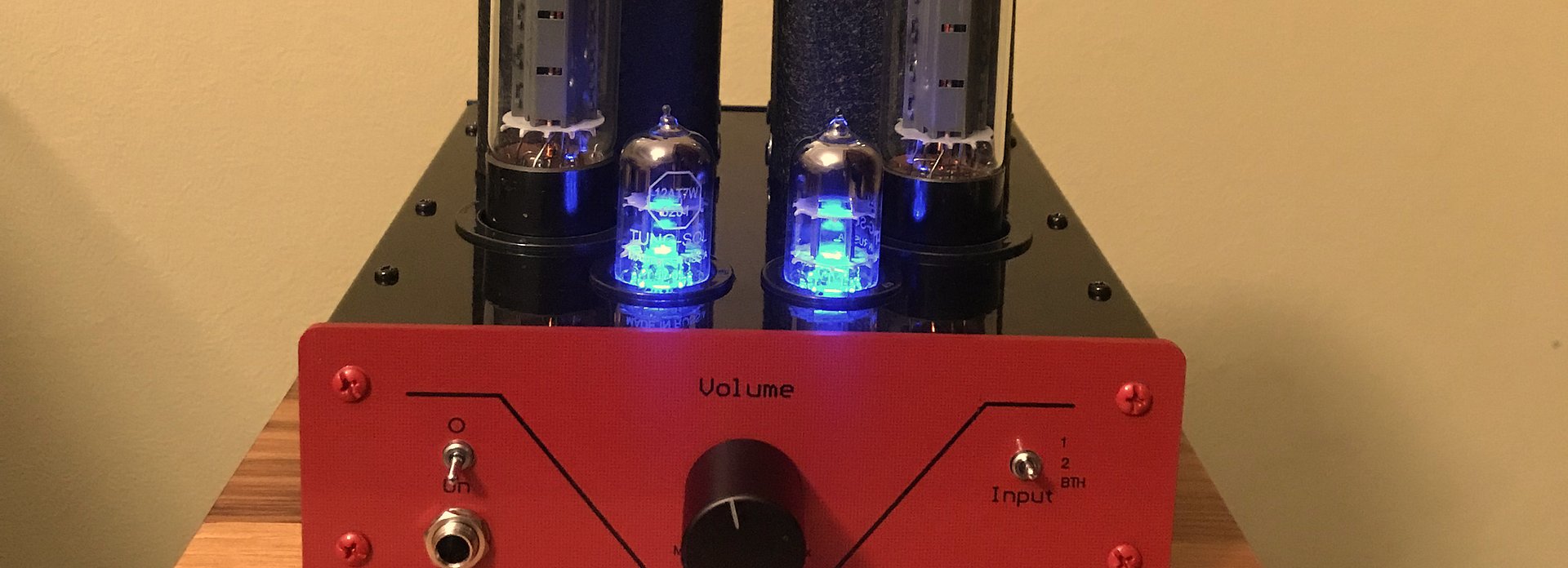
SFE 001 - Why Do Tube Amplifiers Sound Different?
SpotFire Engineering Library
By Phil Wait
Engineering Insight
Tube amplifiers do not all sound the same, and neither do transistor amplifiers. The sound of any amplifier is determined far more by its engineering design than by the type of devices used. Harmonic distortion, output transformer design, operating class, loudspeaker interaction and circuit design all contribute to the final result.
AI Summary
This article explains why tube amplifiers often sound different from transistor amplifiers. It examines the engineering factors responsible for these differences, including harmonic distortion, output transformers, Class A operation and negative feedback, and explains why good engineering is far more important than myths or marketing claims.
Introduction
Few topics in high-fidelity audio generate more discussion than the sound of tube amplifiers.
Some listeners describe them as warm, smooth or musical, while others prefer the precision and low distortion of modern solid-state amplifiers.
The reality is that there is no single "tube sound". Different tube amplifiers can sound quite different from each other, just as different transistor amplifiers can.
The character of an amplifier depends on the engineering decisions made by its designer.
What is it about tube sound?
How could a state-of-the-art audio amplifier with impeccable specifications, vanishingly low distortion, and oodles more power, ever be considered by some to be inferior to something developed about a century ago?
Almost 40 years ago, (together with Ron Keeley, a noted Australian musician), I designed and published a 140-watt DIY valve guitar amplifier in the Australian edition of Electronics Today International magazine (ETI) - a popular electronics magazine still published in some countries.
The words Ron and I penned on our Remington typewriters in 1980 are just as relevant today; ... “the valve vrs. transistor argument will probably never be settled conclusively. Despite all the obvious advantages of solid-state musicians prefer valves because, they say, valve amps simply sound ‘better’, subjectively"
"The reason most often advanced is that valves produce predominantly second harmonic distortion, whereas transistor amp distortion is mainly third harmonic. While this is true, it is not the whole truth; the distinctive sound of valves is caused by the synergy of many factors...."
Read on to learn about those many factors ...
Harmonic Distortion
One of the biggest differences between tube and transistor amplifiers is the type of distortion they produce when approaching their operating limits.
All amplifiers generate some harmonic distortion because no electronic device is perfectly linear.
Tube amplifiers, particularly single-ended Class A designs, often produce a relatively strong second harmonic, with progressively smaller higher-order harmonics.
The second harmonic is one octave above the original musical note and is often perceived as less intrusive.
As the harmonic order increases, the harmonics become progressively more noticeable. Higher-order odd harmonics, particularly the fifth and above, are generally more noticeable to the ear and are often perceived as less pleasant than predominantly second-harmonic distortion. Higher level odd order harmonics are a characteristic of Class AB push-pull amplifiers.
Modern well-designed amplifiers, especially solid-state amplifiers, produce extremely low distortion levels under normal listening conditions, but the harmonic structure still contributes to the amplifier's overall character and that is one of the factors that give tube amplifiers their characteristic difference.
Distortion alone does not explain tube sound. It is one factor among several.
How Valve Amplifiers Enter Overload
A significant contributor is how distortion increases with output level. Many valve amplifiers exhibit a gradual, rounded transition into overload. By contrast, many solid-state amplifiers clip more abruptly once their limits are reached.
This means that when driven hard — particularly on musical peaks — a valve amplifier may sound more forgiving, even though it is technically producing distortion.
Output Transformers
Most tube amplifiers require an output transformer to match the relatively high impedance of the output valves to the much lower impedance of a loudspeaker.
The output transformer is one of the most important components in the amplifier.
Its design influences:
low-frequency performance
high-frequency response
distortion
power transfer
overall bandwidth
A high-quality transformer is physically large, carefully designed and one of the most expensive components in a tube amplifier.
It is also one of the main reasons why well-designed tube amplifiers continue to perform so well.
Class A Operation
Many tube amplifiers operate in Class A, where the output valve conducts current throughout the entire audio waveform.
Class A operation is relatively inefficient and generates considerable heat, but it offers excellent linearity and smooth overload characteristics.
Many listeners appreciate the natural presentation of a well-designed Class A amplifier, particularly when combined with efficient loudspeakers.
Negative Feedback
Negative feedback is another important part of amplifier design.
Used correctly, it reduces distortion, improves frequency response, lowers output impedance and increases stability.
Some tube amplifiers use relatively high levels of feedback, while others use only modest amounts.
The important point is not how much feedback is used, but how well it is integrated into the overall design.
Loudspeaker Interaction
An amplifier never works in isolation.
It always operates as part of a complete system that includes the loudspeaker.
Because tube amplifiers often have a higher output impedance than many transistor amplifiers, they may interact differently with certain loudspeakers.
This is one reason why loudspeaker selection is particularly important when assembling a high-quality audio system.
The generally higher output impedance of many tube amplifiers reduces loudspeaker damping, which allows the loudspeaker’s own characteristics to play a greater role in the final sound. This interaction can result in what listeners often describe as a more lively or expressive presentation.
Dynamic Behaviour Into Real Loads
Loudspeakers are not simple resistive loads — their impedance varies with frequency. Because a valve amplifier uses an output transformer and typically has a higher output impedance than a solid-state amplifier, it interacts differently with the varying impedance of a loudspeaker. This interaction can subtly influence frequency response, dynamics and tonal balance.
This behaviour is sometimes described as greater dynamic output, though it is better understood as load interaction rather than extra power.
Modern Tube Amplifiers
Modern tube amplifiers often combine traditional valve technology with contemporary engineering techniques.
Printed circuit boards, carefully designed switch-mode power supplies, precision components and modern measurement equipment all contribute to improved consistency and reliability.
Good engineering does not depend on using old technology or new technology.
It depends on selecting the most appropriate technology for the job.
There Is No Single "Tube Sound"
One of the biggest misconceptions in audio is that every tube amplifier sounds the same - They do not.
Changing the operating class, output transformer, power supply, feedback level, circuit topology or loudspeaker can all influence the final result.
Just as there are excellent and mediocre transistor amplifiers, there are excellent and mediocre tube amplifiers.
The quality of the engineering ultimately determines the quality of the sound.
From the Designer's Bench
One of the questions I'm most often asked is, "What gives a tube amplifier its sound?"
There is no single answer.
Over many years of amplifier design, I've found that the best results come from treating the amplifier as a complete system. The operating conditions, output transformers, power supply, loudspeaker matching and overall circuit design all work together.
Concentrating on any one aspect while ignoring the others rarely produces the best result.
In Summary
Valve amplifiers persist not because they outperform modern designs on paper, but because their electrical behaviour can produce a listening experience that some people find more engaging. Understanding these mechanisms helps separate mythology from engineering — and allows informed choices rather than ideological ones.
Together, the above factors create a sound that some listeners prefer, particularly in systems using efficient loudspeakers and moderate listening levels.
SpotFire Engineering Perspective
SpotFire amplifiers are designed using this systems approach.
Rather than chasing a single specification or following fashionable trends, the objective is to achieve an appropriate balance of low distortion, wide bandwidth, reliability and enjoyable musical performance.
Every engineering decision is made with the performance of the complete amplifier in mind.
Key Points
There is no single "tube sound".
Harmonic distortion influences the character of an amplifier, but it is only one factor of many.
Output transformer quality has a major effect on performance.
Class A operation offers excellent linearity but generates heat.
Negative feedback is an engineering tool, but needs to be used carefully.
Good engineering is more important than myths or marketing claims.