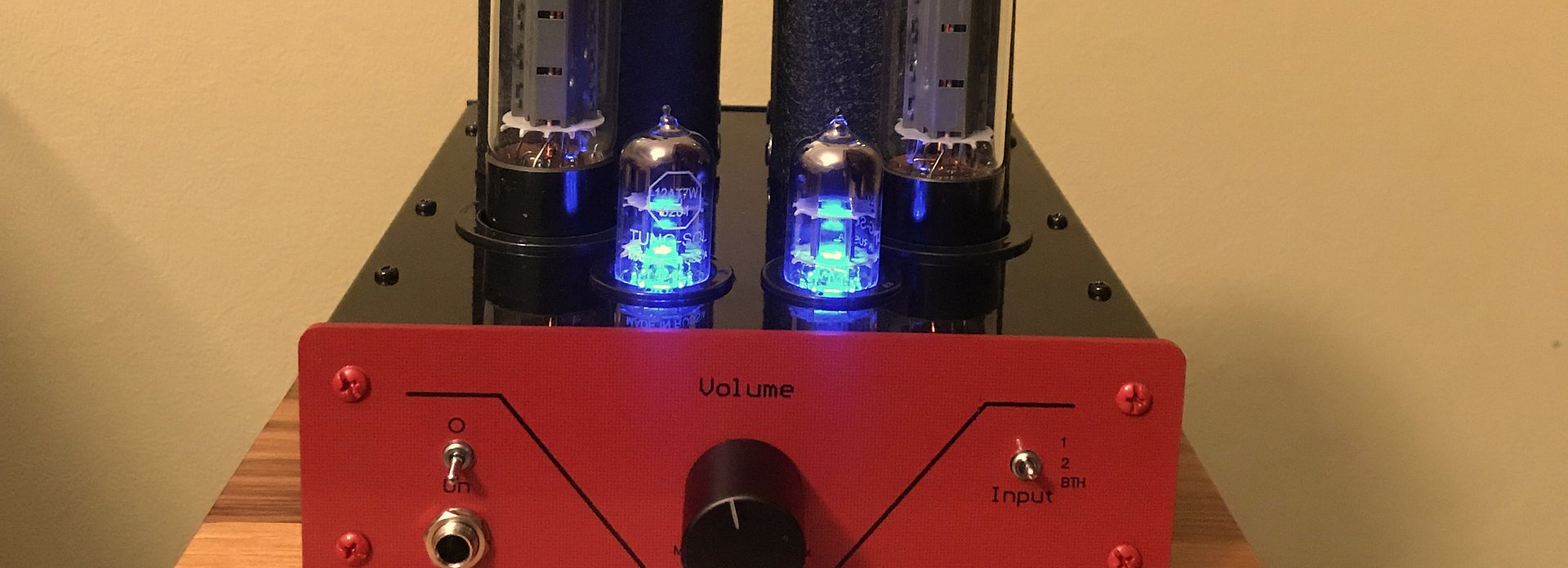
Why Do People Prefer Tube Sound?
How could tubes/valves possibly survive when they are clearly technically inferior? How could a state-of-the-art audio amplifier with impeccable specifications, vanishingly low distortion, and oodles more power, ever be considered inferior to something developed about a century ago?
What is it about tube sound?
Almost 40 years ago, (together with Ron Keeley, a noted Australian musician), I designed and described a 140 Watt DIY valve guitar amplifier in the Australian edition of Electronics Today International magazine (Eti) - a popular electronics magazine still published in some countries.
The words Ron and I penned on our Remington typewriters in 1980 are just as relevant today; ... “the valve vrs. transistor argument will probably never be settled conclusively. Despite all the obvious advantages of solid-state musicians prefer valves because, they say, valve amps simply sound ‘better’, subjectively – like the preference some people have for an old Harley-Davidson or Triumph motorbike, rather than a modern high-revving performance machine (this was the Kawasaki Z1-R era). On the other hand, there are definite technical reasons why a valve amp will sound ‘different’," (but is tube sound better, or just different).
"The reason most often advanced is that valves produce predominantly second harmonic distortion, whereas transistor amp distortion is mainly third harmonic. While this is true, it is not the whole truth; the distinctive sound of valves is caused by the synergy of many factors, and the spectral balance of the distortion factors is just one of them. Other important factors are the shape of the distortion-power curve, the fact that valve amps are transformer coupled to the load (which affects the overall response of the amp), the higher output impedance of valve amps (resulting in reduced damping of the loudspeaker and a more ‘colourful’ tube sound), and the higher ‘dynamic output’ of valve amps (the ability to deliver relatively constant power output to a varying load; i.e. a speaker). If all these factors could be built into a transistor amp, then possibly it would sound, subjectively, like a valve amp. Many have tried to do this – most have failed”.
So, Why Do People Prefer “Tube Sound”?
From a purely measurement-driven perspective, modern solid-state amplifiers can achieve:
extremely low distortion
very wide bandwidth
high output power
excellent measured linearity
Given this, it is reasonable to ask why valve (tube) amplifiers — a much older technology — remain popular. The answer is not that valve amplifiers are better in an absolute sense, but that they behave differently, and those differences can be subjectively appealing in certain systems.
A Long-Standing Debate
The valve versus transistor discussion has existed since the earliest days of solid-state audio. One commonly cited explanation is harmonic distortion. Valve amplifiers often produce a higher proportion of second-order harmonic distortion, while solid-state amplifiers tend to generate more third-order and higher-order harmonics when pushed into non-linearity.
Second-order distortion is musically related to the fundamental tone and is often perceived as less intrusive. However, this alone does not explain tube sound. It is one factor among several.
How Valve Amplifiers Enter Overload
A more significant contributor is how distortion increases with output level. Many valve amplifiers exhibit a gradual, rounded transition into overload. By contrast, many solid-state amplifiers clip more abruptly once their limits are reached.
This means that when driven hard — particularly on musical peaks — a valve amplifier may sound more forgiving, even though it is technically producing distortion.
Output Transformers and Loudspeaker Interaction
Most valve amplifiers use output transformers to couple the amplifier to the loudspeaker. This has several consequences:
the frequency response of the system is influenced by the transformer
the amplifier presents a higher output impedance to the loudspeaker
loudspeaker damping is reduced compared with many solid-state designs
Reduced damping allows the loudspeaker’s own characteristics to play a greater role in the final sound. This interaction can result in what listeners often describe as a more lively or expressive presentation.
Dynamic Behaviour Into Real Loads
Loudspeakers are not simple resistive loads — their impedance varies with frequency. Many valve amplifiers are able to deliver relatively consistent power into these varying loads, which can affect perceived dynamics and tonal balance.
This behaviour is sometimes described as greater dynamic output, though it is better understood as load interaction rather than extra power.
Why These Characteristics Are Hard to Replicate
In principle, it is possible to design a solid-state amplifier that mimics many of these behaviours. In practice, doing so requires deliberately relaxing some of the characteristics that modern solid-state design typically optimises for, such as very low output impedance and extremely high damping factor. Many designers have attempted this with varying degrees of success.
Better, or Just Different?
Tube sound is not inherently superior. It is the result of:
harmonic structure
overload behaviour
transformer coupling
output impedance
loudspeaker interaction
Together, these factors create a sound that some listeners prefer, particularly in systems using efficient loudspeakers and moderate listening levels.
In Summary
Valve amplifiers persist not because they outperform modern designs on paper, but because their electrical behaviour can produce a listening experience that some people find more engaging. Understanding these mechanisms helps separate mythology from engineering — and allows informed choices rather than ideological ones.
Thanks for reading about tube sound.