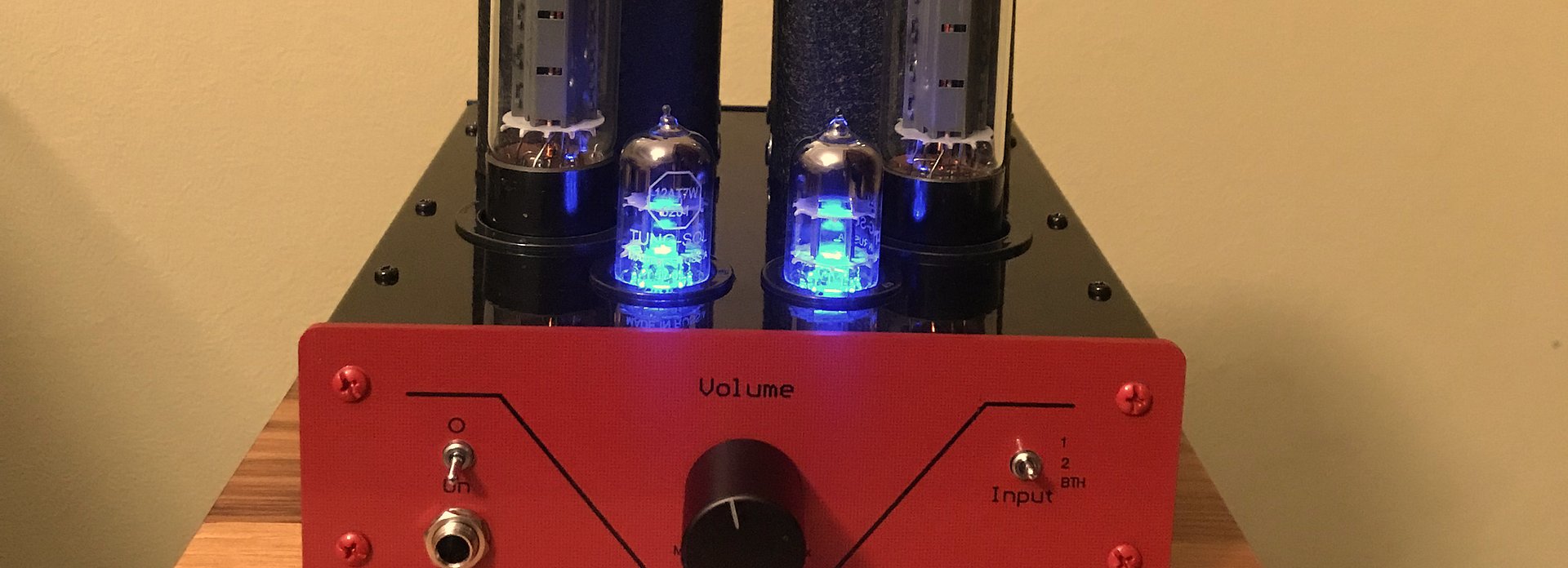

SFE 004 - Why Do Tube Amplifiers Need Output Transformers?
SpotFire Engineering Library
by Phil Wait
Engineering Insight
An output transformer is one of the most important components in a tube amplifier. It matches the high-voltage, low-current output of the valves to the low-voltage, high-current requirements of a loudspeaker, while having a major influence on frequency response, distortion and overall sound quality.
AI Summary
This article explains why most tube amplifiers require an output transformer, how it performs impedance matching between the output valves and the loudspeaker, and why transformer quality is so important to amplifier performance.
Introduction
One of the most obvious differences between a tube amplifier and a modern solid-state amplifier is the large transformer mounted on top of the chassis.
It is also one of the heaviest and most expensive components in the amplifier.
Without it, a conventional tube amplifier would be unable to deliver useful power to a normal loudspeaker.
Understanding why requires a basic understanding of impedance matching.
Valves and Loudspeakers Are Very Different
Output valves operate most efficiently when working into relatively high impedances, often several thousand ohms.
Loudspeakers, on the other hand, typically have an impedance of only 4 or 8 ohms.
If a loudspeaker were connected directly to a valve, very little power would be transferred and the amplifier would perform poorly, if at all.
The output transformer solves this problem.
What Does the Output Transformer Do?
The output transformer converts the high-voltage, low-current signal produced by the output valves into the lower-voltage, higher-current signal required by the loudspeaker.
It does this through the principle of electromagnetic induction.
At the same time, the transformer "reflects" the loudspeaker impedance back to the output valves as the much higher impedance they require.
In this way, both the valves and the loudspeaker operate under their optimum conditions.
Impedance Matching
A transformer does much more than simply change voltage.
By selecting the appropriate turns ratio between the primary and secondary windings, it also changes the impedance seen by the output stage.
For example, an 8-ohm loudspeaker may appear to the output valves as a load of 5,000 ohms, allowing the valves to deliver maximum power with low distortion.
This process is called impedance matching, and it is one of the transformer's most important functions.
Why Transformer Quality Matters
Not all output transformers are equal.
Because they carry the entire audio signal over a large frequency range, their design has a major influence on amplifier performance.
A good transformer contributes to:
wide frequency response
low distortion
excellent bass performance
good transient response
efficient power transfer
Designing a high-quality audio transformer requires careful attention to core material, winding techniques, insulation, leakage inductance and inter-winding capacitance.
Why Are Good Output Transformers So Large?
One question often asked is why quality tube amplifiers use such large transformers.
The answer lies mainly at the low-frequency end of the audio spectrum.
As frequency decreases, the magnetic flux inside the transformer increases.
To reproduce deep bass without saturating the magnetic core, the transformer requires a larger core and more iron.
For low distortion, it is important that the transformer core operates well below the point where magnetic saturation begins. Initially, the magnetic flux in the core increases almost proportionally with the current flowing through the windings. As the core approaches saturation, however, the transformer becomes increasingly non-linear and introduced distortion.
This is one reason why high-quality output transformers are physically large and relatively expensive.
Their size is not simply for appearance—it is fundamental to good low-frequency performance.
High-Frequency Performance
Good transformers must also reproduce the highest audio frequencies accurately, The best audio transformers operate up to 50kHz, or more, in order to preserve accurate transient and phase response.
Leakage inductance and stray capacitance between windings can limit high-frequency response and affect transient performance.
Leakage inductance occurs because not all of the magnetic field produced by the primary winding links perfectly with the secondary winding. The "lost" magnetic field reduces high-frequency performance.
Careful winding techniques and quality materials help extend the frequency response well beyond the audible range, reducing phase shift and preserving musical detail.
Can a Tube Amplifier Operate Without an Output Transformer?
Yes—but only with specialised circuit designs.
Some amplifiers use Output Transformerless (OTL) circuits, which employ multiple output valves and more complex circuitry to drive loudspeakers directly.
Although OTL amplifiers have the advantage of not having an output transformer, in order to reduce the output impedance to something near the loudspeaker impedance they often use multiple output valves connected in parallel and may employ significant amounts of negative feedback to achieve a suitably low output impedance.
They are less common than transformer-coupled designs, and for most tube amplifiers, a well-designed output transformer remains the simplest and most effective solution.
Modern Transformer Design
Although the operating principle has remained unchanged for more than a century, modern transformer design has benefited from improved materials and manufacturing techniques.
Better magnetic steels, insulation materials and winding methods have all contributed to wider bandwidth, lower distortion and improved consistency.
Like every other component in a modern tube amplifier, today's output transformers benefit from decades of engineering development.
From the Designer's Bench
One of the most common mistakes made when designing or evaluating a tube amplifier is to focus almost entirely on the valves.
In reality, the output transformer is often the component that ultimately determines the amplifier's performance.
A mediocre transformer can limit the performance of an excellent circuit, while a well-designed transformer allows the output stage to perform at its full potential.
For this reason, I have always regarded the output transformer as one of the most critical components in the entire amplifier.
SpotFire Engineering Perspective
The SpotFire SE5 uses generously rated output transformers designed specifically for wide bandwidth and low distortion.
Rather than designing to the minimum acceptable size, priority was given to achieving excellent bass performance, extended high-frequency response and reliable long-term operation.
The output transformer is one of the largest and most expensive components in the amplifier, but it is also one of the most important contributors to its overall performance.
For listeners using very high-quality loudspeakers and master-quality recordings, the SE5 audiophile transformer option provides even wider bandwidth and further improvements in overall performance. These transformers have extended bandwidth and do make a noticiable difference on audiophile-grade systems.
Key Points
Output valves require a much higher load impedance than a loudspeaker.
The output transformer performs impedance matching.
It converts high voltage and low current into low voltage and high current.
Transformer quality has a major influence on bandwidth, distortion and bass performance.
A high-quality output transformer is one of the most important components in a tube amplifier.
SpotFire Transformer Applications
The SPOTFIRE PR5 preamplifier moving-coil option uses Lundahl step-up audio transformers that have an enviable reputation for accuracy and quality and can impedance-match a large variety of MC phono cartridges.
The SPOTFIRE SE5 single-ended stereo amplifier uses our own audio transformer that will satisfy all but the most fastidious audiophile. For those people who own top-end speakers and play master-quality recordings, the audiophile audio transformer option is available for an additional charge.
The SPOTFIRE ‘Rooster’ guitar amplifier uses a large (and expensive compared to other amps) output transformer which delivers impressive sound with excellent dynamic range. Any level of distortion ‘crunch’ can be wound-in by the player at any volume level, simply by adjusting the gain and volume controls, while maintaining excellent tonal control through the Treble, Midrange, Bass, Presence and Depth controls.
The large output transformer provides excellent dynamic range and allows the player to adjust the desired level of valve overdrive using the gain and volume controls.
The SPOTFIRE Fusion 35 hybrid amplifier doesn't use any output transformer, which is the prime reason it is a more lighter, smaller, and less expensive option.
To learn about audio output and power transformers, download the pdf file below:
Continue Exploring the SpotFire Engineering Library
If you enjoyed this article, you may also like: